Purification Systems
Not sure which service you need?
Treatment Plants
Not sure which service you need?


Reach out on WhatsApp for a free site visit and quote.
Parts of coastal Kochi and nearby areas draw from brackish or saline groundwater, which standard RO systems are not built to handle. HomeCare RO installs desalination plants using seawater and brackish-water RO membranes rated for higher salinity, sized to the source water and required output.
Seawater and brackish water RO for coastal and saline groundwater sources
Genuine parts, transparent pricing, and a technician who shows up on schedule.
A brackish water desalination plant removes dissolved salts from water that is saltier than fresh groundwater but less salty than seawater. In coastal Kerala, this is often the practical answer for open wells and borewells that turn saline near backwaters or in dry months. HomeCare RO supplies and services these plants for homes, apartments, resorts and small institutions in Kochi and surrounding areas.
Brackish feed water has a lower salt concentration than seawater, so it is easier to treat and consumes less energy. Reverse osmosis is the preferred method. A high-pressure pump forces water through a semi-permeable membrane that passes water molecules while rejecting dissolved salts, hardness minerals and most contaminants.
A typical brackish water plant goes through four stages. Intake and pretreatment remove silt, sand, algae and large particles using sand filtration, cartridge filtration and antiscalant dosing. Reverse osmosis then removes the bulk of dissolved salts. Post-treatment adds calcium and magnesium back into the water and may include UV or UF disinfection to keep stored water stable. Finally, the concentrated reject water, or brine, is drained safely or diluted before disposal.
India’s high-profile desalination projects such as the Minjur plant, the two Chennai plants from 2010 and 2013, and several Gujarat proposals are mostly seawater or coastal installations. A brackish water desalination plant in India is usually a smaller, site-specific system for a borewell, society, resort, hospital or factory. That changes the design approach: the actual feed test matters more than copying a seawater plant specification.
| Factor | Brackish water desalination | Seawater desalination |
|---|---|---|
| Feed salinity | Lower than seawater | Much higher salinity |
| Energy demand | Lower energy requirement | Higher energy demand |
| Preferred process | Reverse osmosis | Reverse osmosis or thermal distillation |
| Typical installations | Borewells, open wells, institutions, industry | Large coastal municipal plants |
A brackish water desalination plant is matched to combined daily demand, not just peak morning flow. The right RO plant size depends on feed TDS, chloride and hardness, source flow rate, storage capacity, and whether the treated water is used for drinking, cooking, bathrooms or process work. A plant that is too small runs continuously and struggles during high demand. A plant that is too large wastes energy and membrane capacity. HomeCare RO checks TDS, hardness and visible contaminants before recommending anything, which also keeps the quotation transparent.
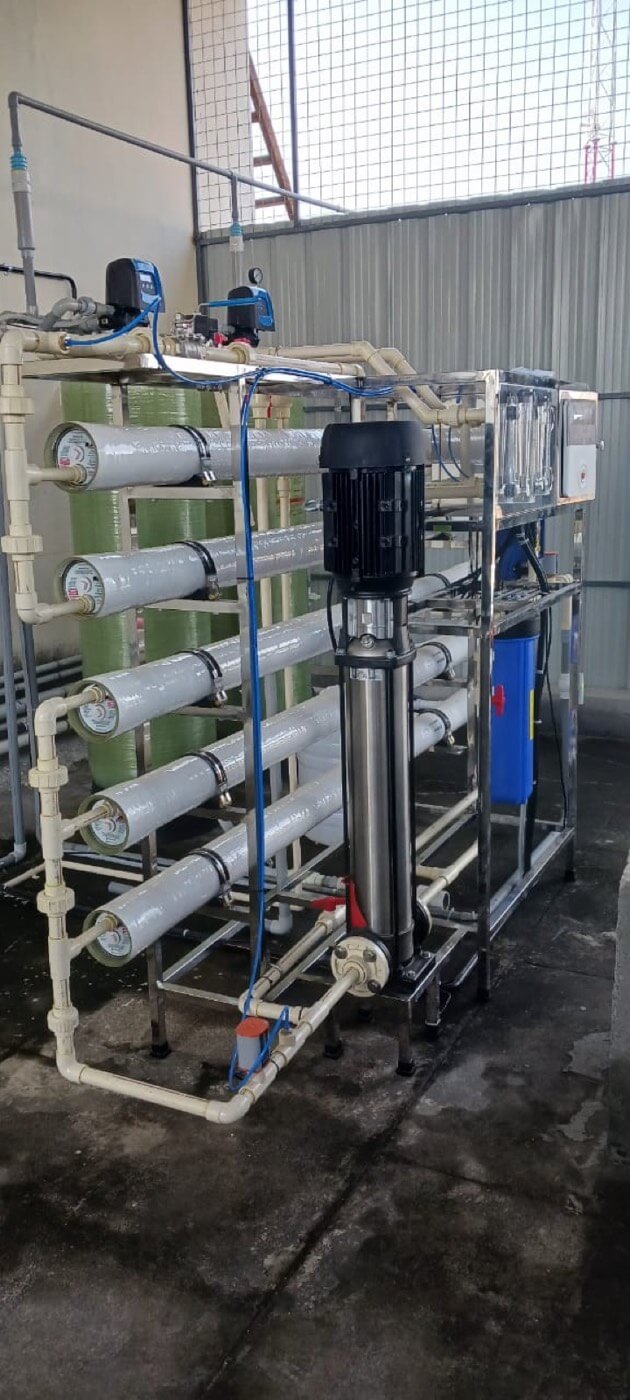
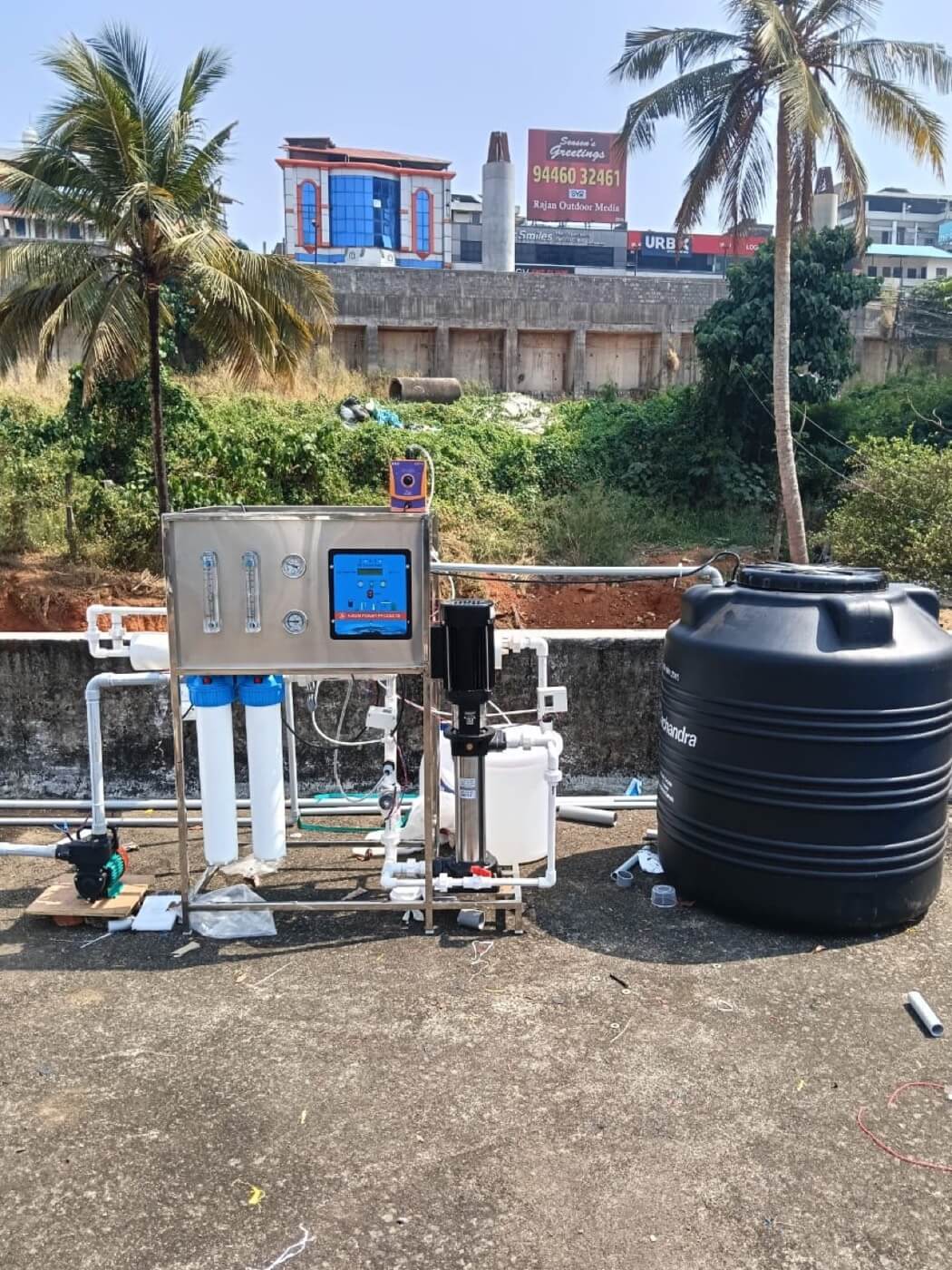
A typical installation starts with a site visit to confirm source water condition, space, drainage and power supply. The plant is usually supplied as a skid with a raw water pump, pretreatment filters, high-pressure pump, RO membranes, UV or UF stage and a treated water tank connection. The reject water line is routed to a drain or dilution point. After installation, the technician checks pressure, recovery, TDS and membrane performance, then hands over the plant only after the treated water meets the agreed quality range. HomeCare RO schedules visits quickly once the customer reaches out on WhatsApp and sends a technician on schedule.
Routine maintenance includes cleaning or replacing sediment and carbon filters, checking antiscalant dosing, inspecting pump pressure, monitoring TDS and cleaning RO membranes when fouling occurs. In Kerala, pre-filters can load faster during the monsoon when open wells carry more silt and turbidity, so filter replacement timing matters.
Common mistakes to avoid:
HomeCare RO offers a free water test or site visit in Kochi and nearby areas of Kerala. Call or WhatsApp +91 97464 88180 to check the TDS, hardness and visible condition of the source water before any quote, with no obligation.
Brackish water is found in coastal aquifers, estuaries, tidal creeks, inland saline groundwater zones and places where seawater intrusion affects open wells or borewells. In Kerala, coastal and backwater-adjacent areas can show seasonal salinity, especially during dry months.
It is the removal of dissolved salts from water that has lower salinity than seawater but is not fit for drinking or utility use. Reverse osmosis is the preferred method because brackish feed needs less energy than seawater.
The Minjur Desalination Plant is located at Kattupalli village near Chennai on the Bay of Bengal. It is described as India’s largest seawater desalination plant and supplies water mainly for industrial use, with public supply during drought periods.
Only if the desalinated water goes through proper post-treatment, including remineralisation with calcium and magnesium and disinfection, and meets drinking water standards. Raw ocean water or untreated RO permeate without mineral correction is not a direct drinking water source.