Purification Systems
Not sure which service you need?
Treatment Plants
Not sure which service you need?


Reach out on WhatsApp for a free site visit and quote.
Hard water from borewells and municipal supply in many parts of Kerala carries high calcium and magnesium content, leading to scale buildup in pipes, water heaters and RO membranes, along with a visible soap-scum residue on fixtures. HomeCare RO installs ion-exchange water softeners sized to household or commercial water usage, reducing hardness before it reaches taps, geysers and RO pre-filters.
Ion-exchange softening for Kerala's hard and mineral-heavy water supply
Genuine parts, transparent pricing, and a technician who shows up on schedule.
A home water softener is a point-of-entry system that removes calcium and magnesium hardness before water reaches bathrooms, geysers, washing machines and other appliances. It is most useful above 60 mg/L as calcium carbonate, which many Indian municipal, borewell and open-well supplies cross. HomeCare RO sizes and installs these for apartments, independent homes and small businesses in Kochi and nearby parts of Kerala.
Hard water contains bicarbonates, chlorides and sulfates of calcium and magnesium. Some Indian locations record calcium carbonate levels up to 180 ppm. Damage includes scale on taps, shower heads and geyser elements, reduced water heater efficiency, higher soap and detergent use, and faster plumbing clogging.
| System type | What it actually does | Good for | Common limitation |
|---|---|---|---|
| Whole-house point-of-entry softener | Softens all water entering the home after the storage tank | Apartments, villas and small businesses with multiple bathrooms | Needs space, a drain connection and regular salt refills |
| Bathroom point-of-use softener | Softens water for one bathroom or geyser line | Single bathrooms and rented apartments | Does not protect the kitchen, other bathrooms or appliances |
| Shower or tap filter | Improves shower water and may reduce chlorine or odour | Small budgets and rental bathrooms | Often sold as a softener but does not reliably remove hardness minerals |
| Washing machine filter | Treats water entering one washing machine | Reducing scale on one appliance | Not a whole-home solution |
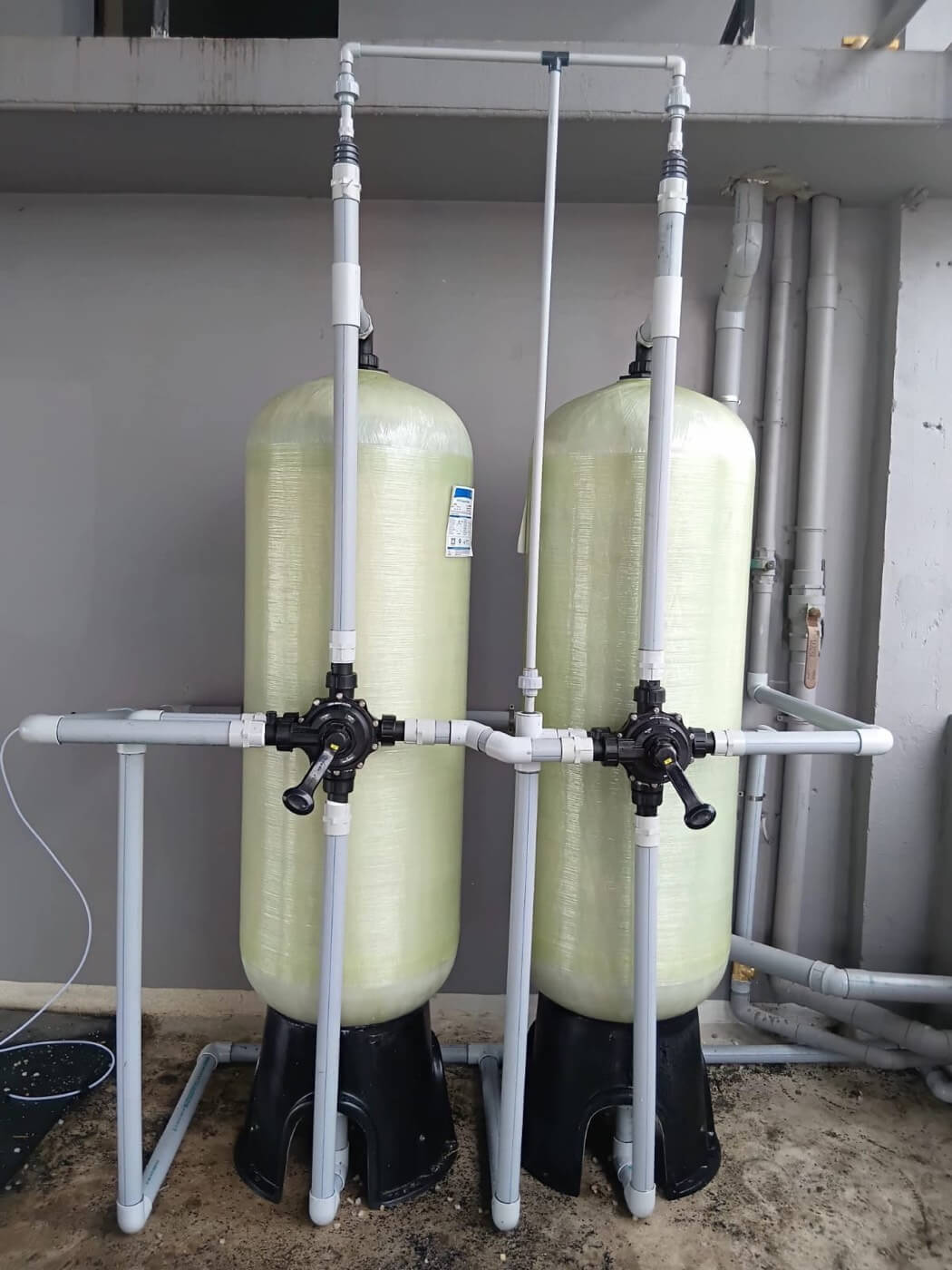
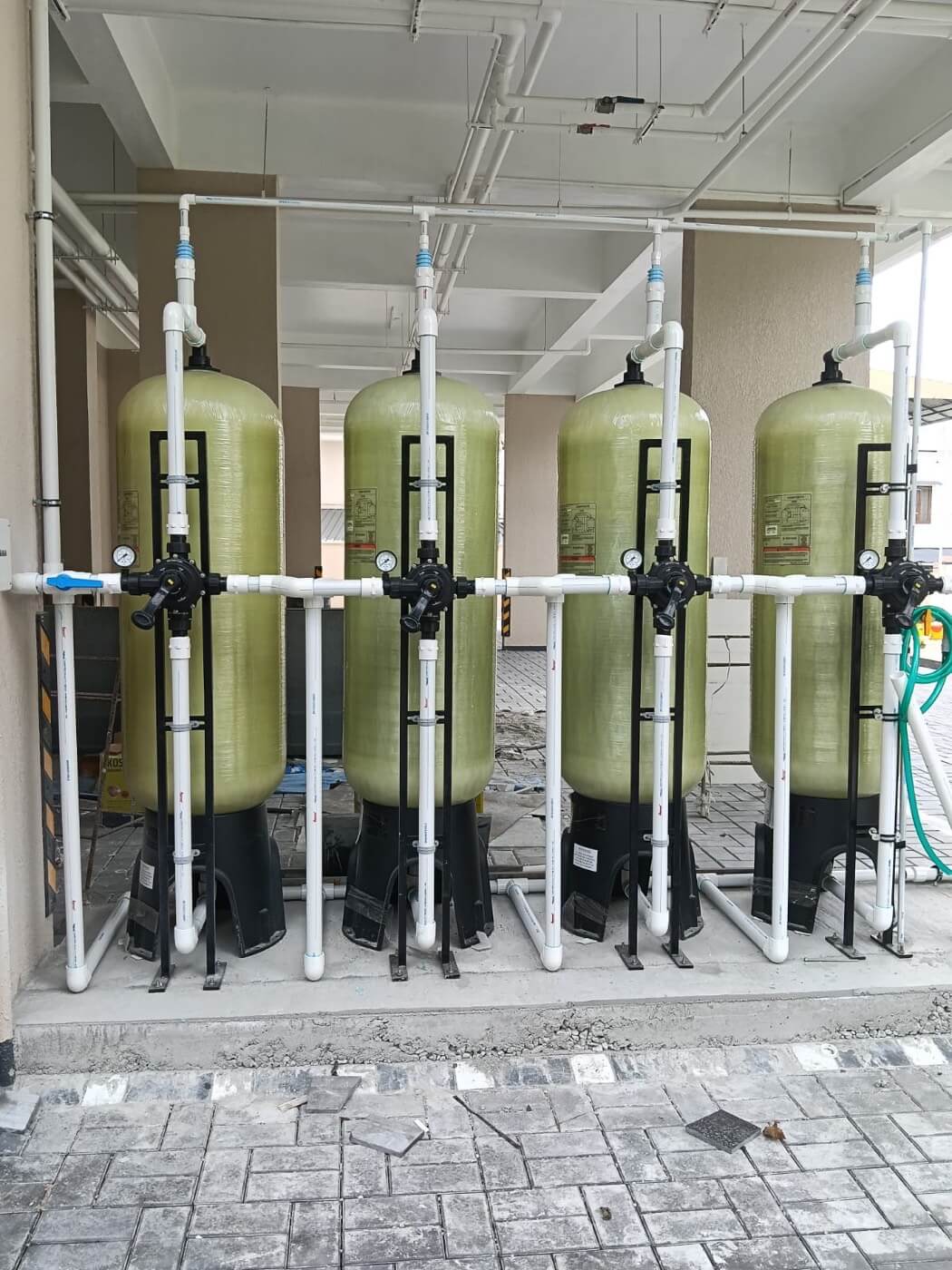
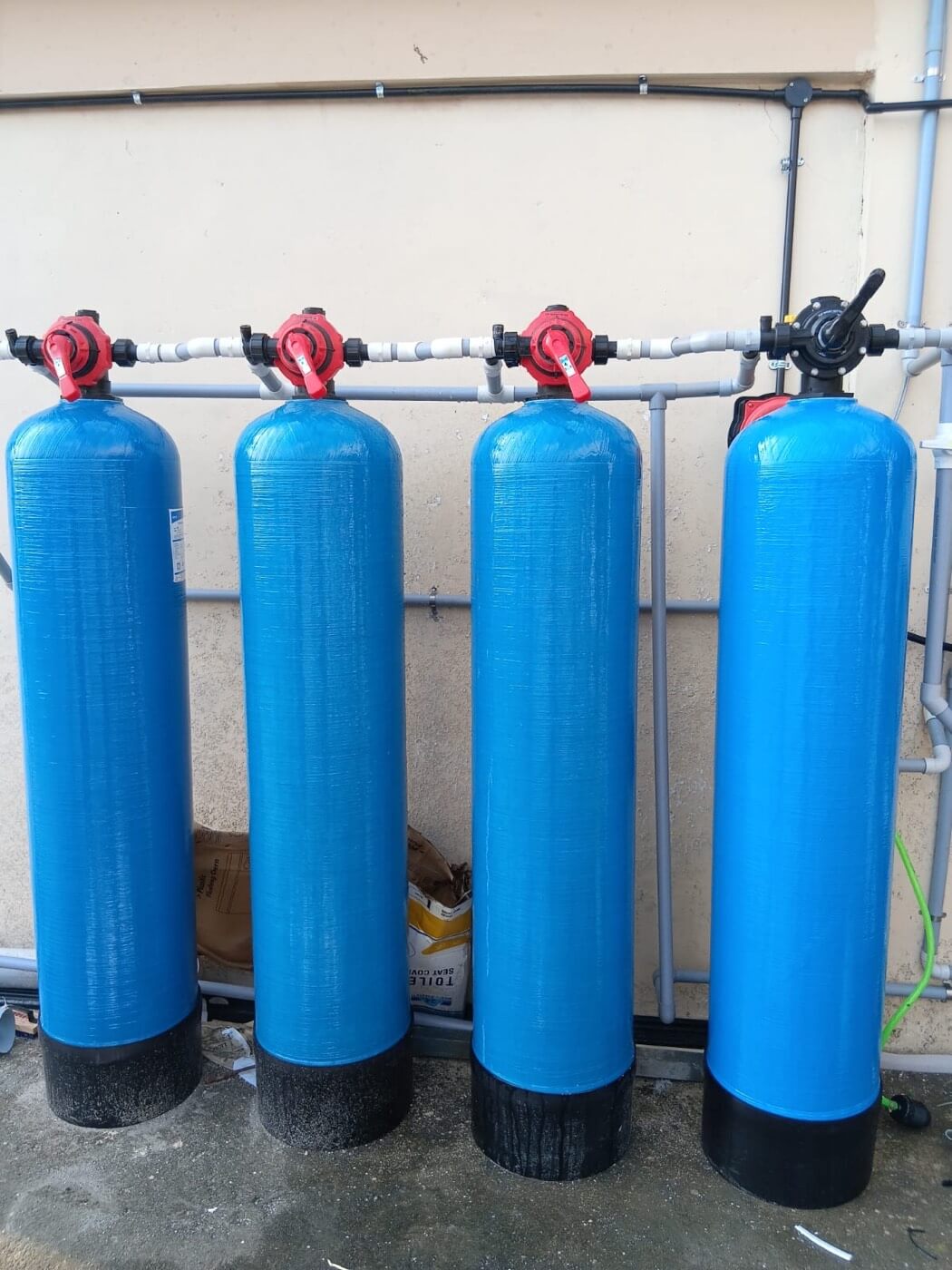
A whole-house softener has a resin tank and a brine tank. Water passes through resin, where calcium and magnesium ions stick and sodium ions are released. Once saturated, brine flows through the resin, washes out hardness minerals and sends them to a drain.
Regeneration can be manual, timer-based or demand-based. Demand-based regeneration measures actual water use and runs only when needed, saving salt and water. Shower filters do not work this way and are not a substitute for a whole-house ion-exchange softener.
Be careful with terms like salt-free resin bed or salt-free conditioner. A true water softener removes hardness minerals using salt or potassium-based regeneration. Salt-free systems condition or descale water but do not remove calcium and magnesium.
Borewell and open-well water in Kochi can carry hardness along with iron or salinity. A free water test helps separate these problems before a softener is recommended.
The correct system depends on hardness, daily water use, bathrooms, peak flow and whether the property is an apartment or independent house. A technician measures hardness and flow at the point of entry, then selects capacity so the resin can handle enough water between regeneration cycles without running out during peak morning use.
For very hard water, a whole-house point-of-entry unit with automatic or demand-based regeneration is the only reliable option. A shower filter under 5000 is point-of-use, not whole-house. Whole-house systems in India are generally compared in the 15000 to 45000 range, but the final quote should follow a site inspection.
A typical installation places the softener after the storage tank and before geysers and bathrooms. It needs a drain and space for the resin tank and salt container. Apartments often install near the sump or utility inlet; independent homes may install near the pressure pump.
HomeCare RO offers a free site visit before every quote. The technician checks hardness, TDS and visible contaminants, then plans installation without hidden charges. Scheduled regeneration and salt refills keep capacity consistent. HomeCare RO also works on higher-capacity softeners for apartments and small businesses, reducing scale damage to boilers, geysers and RO systems.
Maintenance includes checking salt level, cleaning the brine tank, replacing pre-filters and inspecting the control valve. If iron or sediment is present, a pre-filter must be installed before the softener or the resin can foul. For drinking water, softened water can be run through a separate RO plant to reduce sodium and other dissolved solids.
The biggest mistake is buying a shower filter when hardness affects every bathroom and appliance. Other errors include choosing by brand or price alone, skipping regeneration on manual systems, confusing salt-free descaling with true softening, and ignoring space, drainage or iron pre-treatment.
If water leaves white scale, clothes feel rough or geyser elements need frequent descaling, a site test is next. HomeCare RO offers a free water test on site before any recommendation. Reach the team on WhatsApp at +91 97464 88180. The visit is obligation-free and helps decide between a point-of-use filter and a whole-house softener.
Not always. Hardness below 60 mg/L as calcium carbonate is not considered hard. Scale, poor lather or geyser clogging usually justifies a softener.
A whole-house point-of-entry ion-exchange softener with automatic or demand-based regeneration is most reliable. Point-of-use filters will not soften the whole home or protect appliances.
It needs salt refills, space and a drain for regeneration wastewater. It releases sodium into treated water, so many homes keep a separate drinking line or pass softened water through an RO plant.
If hard water causes scale, damaged fittings or high soap use, a softener usually pays for itself. Decide after a hardness test and site survey.