Purification Systems
Not sure which service you need?
Treatment Plants
Not sure which service you need?


Reach out on WhatsApp for a free site visit and quote.
Borewell water in several parts of Kerala carries dissolved iron that oxidizes on contact with air, leaving orange-brown staining on clothes, sanitaryware and RO membranes, along with a metallic taste and smell. HomeCare RO installs iron removal plants using aeration and manganese-media filtration to bring iron content down before the water reaches the rest of the plumbing or an RO system.
Removing iron and manganese from borewell water common across Kerala
Genuine parts, transparent pricing, and a technician who shows up on schedule.
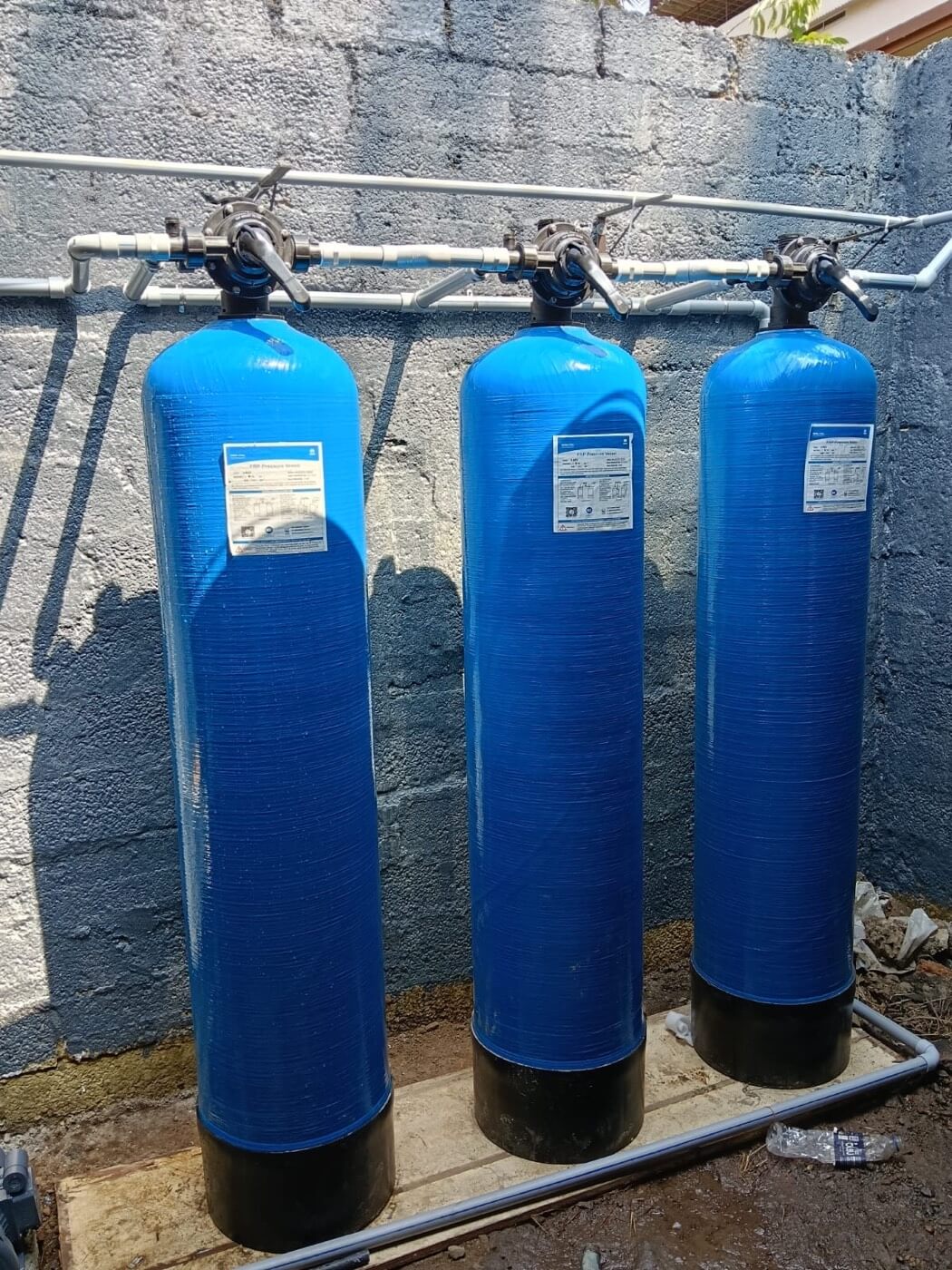
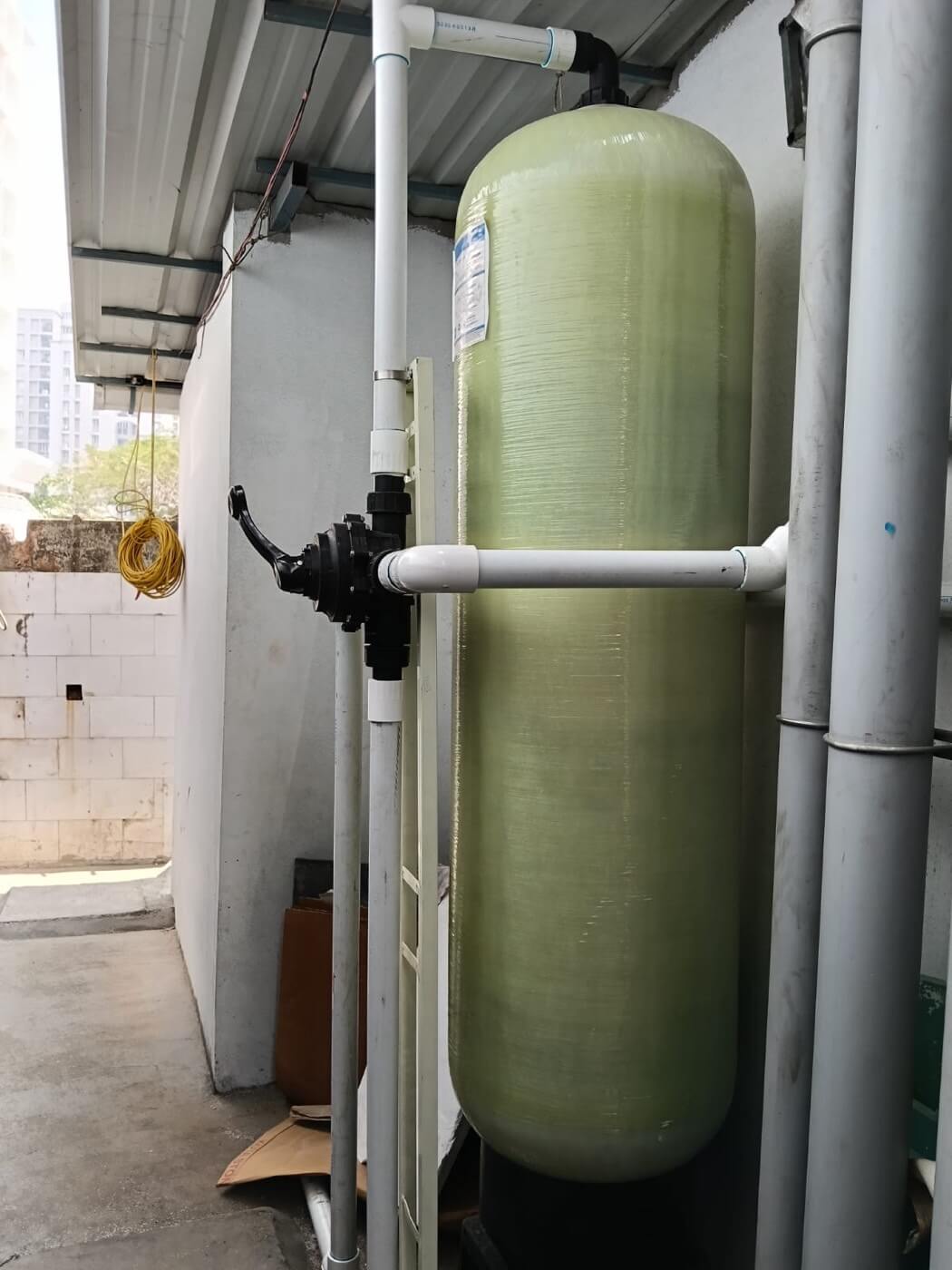
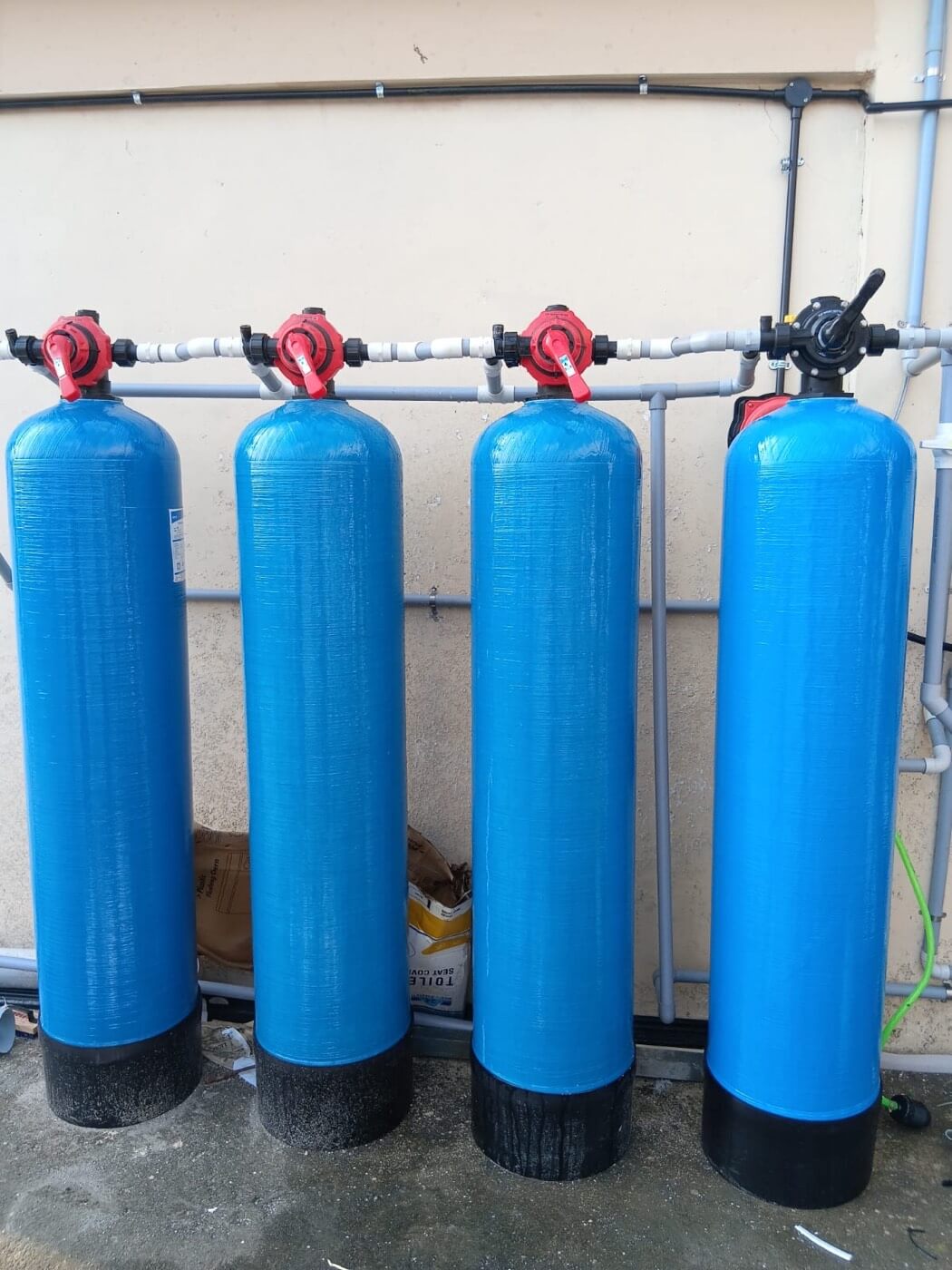
An iron removal filter for borewell water is installed on the main supply line, usually before the overhead tank, to oxidise dissolved iron and trap particles that cause yellow, orange or reddish-brown water. HomeCare RO supplies and installs these systems in Kochi and nearby Kerala areas for homes, apartments and communities. The correct system depends on a raw water test, not colour alone.
Borewell water often contains dissolved iron that looks clear. After air exposure, the iron oxidises into suspended particles. A media-based iron removal filter works in two stages: dissolved iron is converted into a filterable form, then the media traps the iron particles. Backwashing flushes the trapped iron out through a drain.
This differs from a sand or sediment filter, which removes visible dirt and turbidity but not dissolved iron. Low pH can slow oxidation, so some installations need pH correction before the iron filter. Flow rate and daily consumption decide media volume and vessel size. Automatic systems backwash on a set schedule where power is available; manual systems need an operator.
Yellow, orange or reddish-brown water often appears after air exposure. Stains may show on bathroom tiles, buckets, clothes and utensils. Some people notice a metallic taste. Colour alone does not prove safety, and clear water can still contain dissolved iron. A raw water test is the only reliable way to know iron level, pH, TDS, hardness, manganese and bacterial contamination.
Professional sizing matters because an undersized filter will not handle the required flow rate and iron load. The main factors are below.
| Parameter | What to Check | Why It Matters |
|---|---|---|
| Iron level | ppm or mg/L in the raw water test | Sets the oxidation method and media volume |
| Flow rate | LPH required by the home or building | Prevents pressure drop and under-treatment |
| pH | Raw water pH value | Affects how quickly dissolved iron oxidises |
| Other contaminants | Hardness, TDS, manganese, bacteria, sediment | Iron removal alone may not treat all of them |
| Daily consumption | Litres used per day | Decides whole-house plant capacity |
| Drain point | Space for backwash discharge | Required for flushing iron particles out |
FRP vessels are common for domestic and light commercial plants. Mild steel and stainless steel appear in larger or industrial applications. Some systems are electric for automatic backwash; others operate on line pressure. Check material and power source before finalising.
A whole-house iron removal filter is installed on the main line before the overhead tank, so treated water flows through existing plumbing. It needs floor-standing space and a nearby drain for backwash discharge. Pre-filtration may be needed for heavy sediment. An iron removal filter is not a water softener. If hardness is high, install a separate softening unit after iron removal.
Iron filters need periodic backwashing to remove trapped iron and maintain flow. Frequency depends on iron load and consumption. Automatic models reduce attention, but a fit and forget claim should be checked. The media bed does not last forever and may need cleaning or replacement. Inspect the backwash cycle and drain line regularly.
An iron removal filter improves appearance and quality, but may not make water safe for drinking. A complete water test is required for microbiological and chemical parameters. Additional reverse osmosis, UV or UF purification may be needed for potable water. For RO purifiers, iron removal ahead protects membranes from iron fouling. Yellow colour alone is not a safety test.
Buying without a water test is the biggest risk. Brown water is not always unsafe, and clear water can contain dissolved iron. A sand filter or softening unit is not an iron removal system. A small cartridge filter is not sufficient for whole-house dissolved iron loads. Undersizing occurs when only tank size is considered, not peak flow rate.
Budget searches often fall under ₹50,000, between ₹50,000 and ₹1,50,000, and above ₹1,50,000. Final cost depends on iron concentration, flow rate, automation level, vessel material, and additional pre-treatment or drinking water purification.
For borewell water in Kochi and nearby areas, HomeCare RO offers a free water test before any quotation. The check covers TDS, hardness and visible contaminants, and the team assesses the installation point and drain. WhatsApp +91 97464 88180.
Use a media-based iron removal filter that oxidises dissolved iron and traps the resulting particles, followed by periodic backwashing. Start with a raw water test to size the system for actual iron level and pH.
A dedicated iron removal filter with oxidation and filtration media is the correct type. A plain sand filter or softening unit is not designed to remove dissolved iron from borewell water.
There is no single best filter. The right unit depends on iron concentration, pH, flow rate, daily consumption, other contaminants and use for bathing, washing or drinking.
Cost depends on capacity, automation, materials and additional purification. Common budget bands are under ₹50,000, between ₹50,000 and ₹1,50,000, and above ₹1,50,000. HomeCare RO provides a quote after a site check and raw water test.