Purification Systems
Not sure which service you need?
Treatment Plants
Not sure which service you need?


Reach out on WhatsApp for a free site visit and quote.
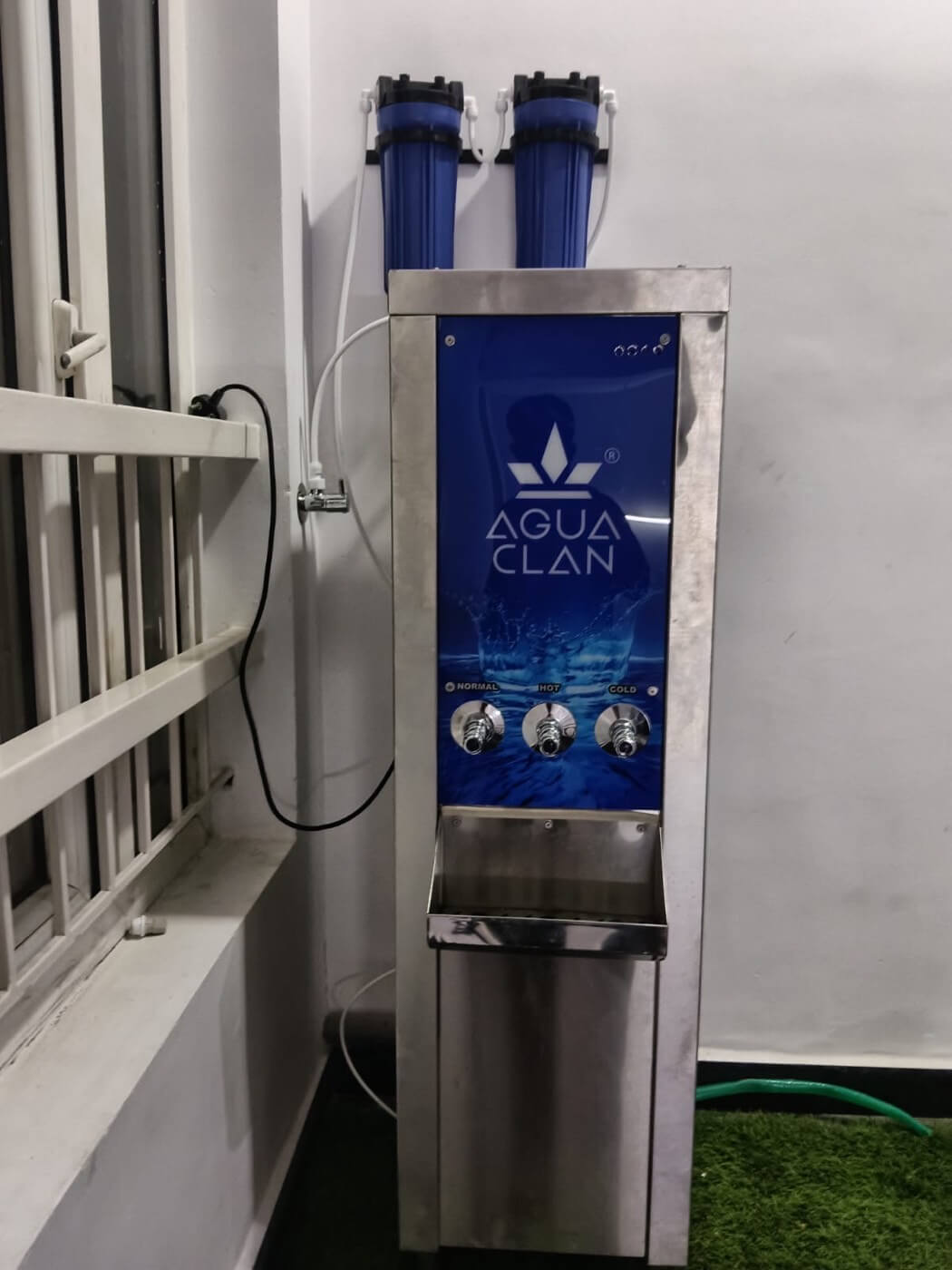
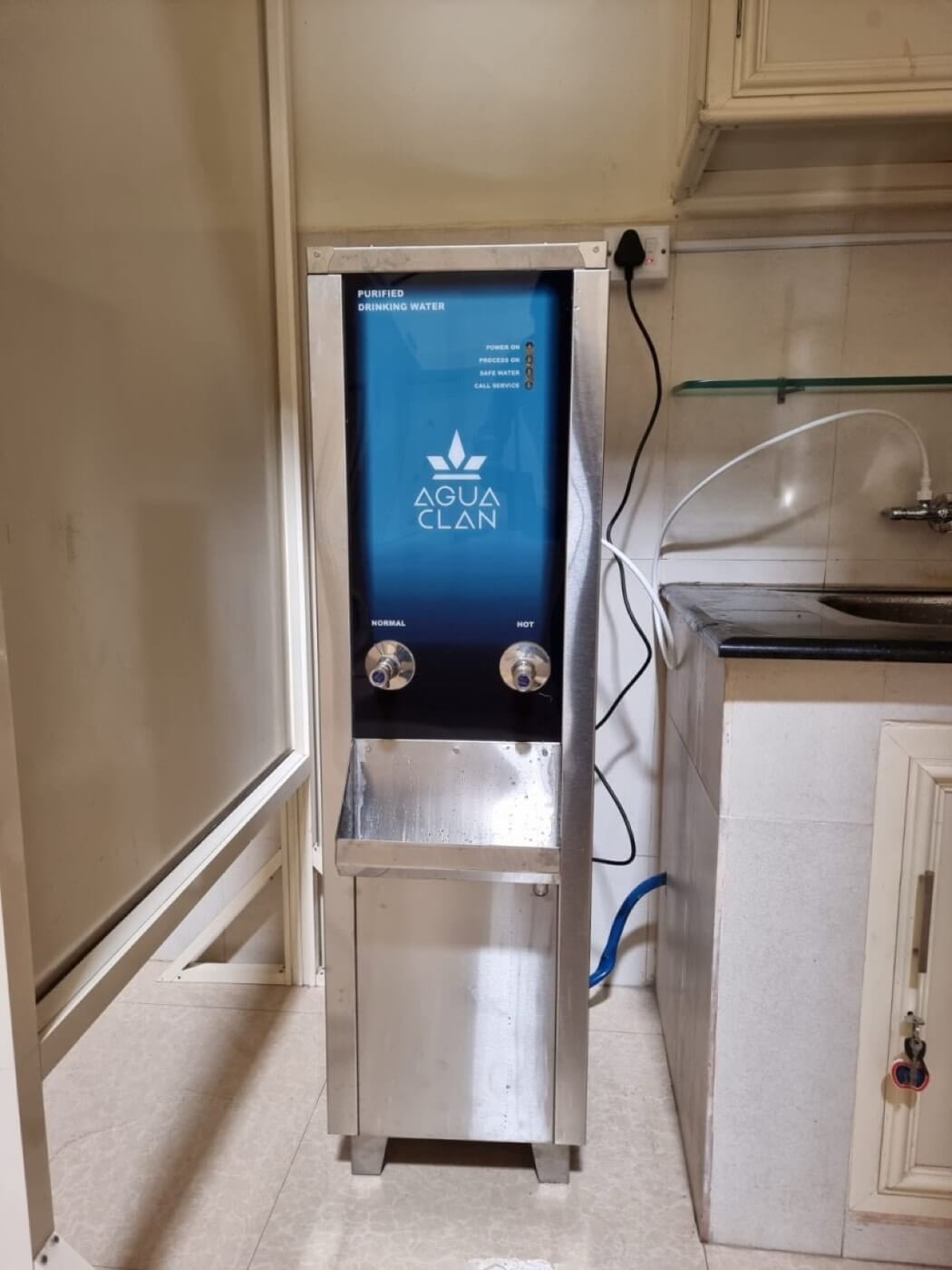
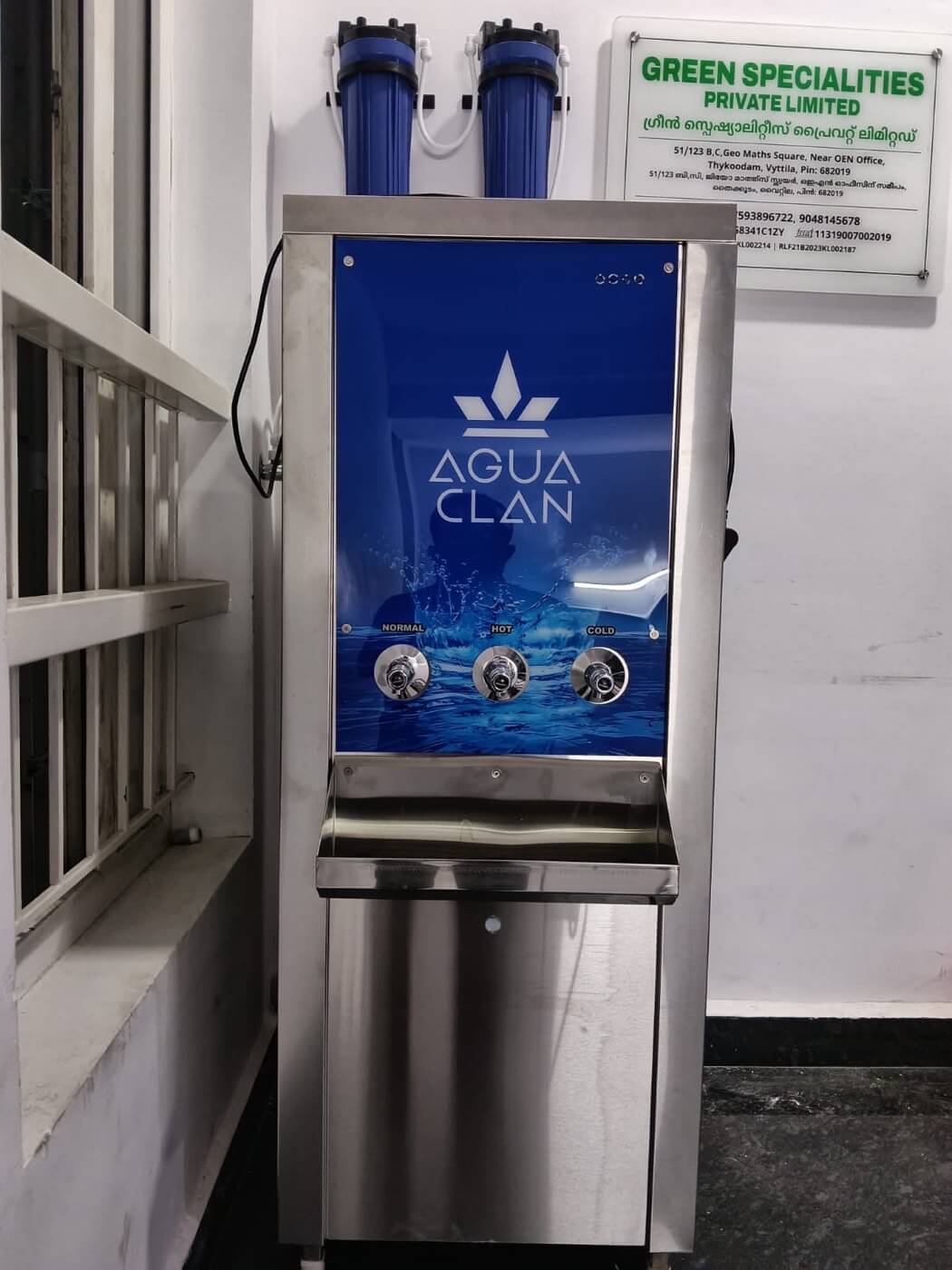
HomeCare RO supplies and installs hot and cold water dispensers connected directly to a purified water line, removing the need for bottled water cans in offices, clinics and homes. Units are available in floor-standing and countertop formats.
Point-of-use dispensers for homes, offices and commercial spaces
Genuine parts, transparent pricing, and a technician who shows up on schedule.
A hot and cold water dispenser with RO for an office is not one standard product. Some units have an inbuilt RO and give hot, normal and cold water; others are hot and cold cabinets that only purify water if an external RO is connected. Kochi offices usually need this when staff count rises, the tea point becomes busy, or incoming borewell, open well or municipal water has high TDS, iron or salinity.
The phrase “with RO” can mean different things depending on the unit.
| Configuration | Output water | RO position | What to check before buying |
|---|---|---|---|
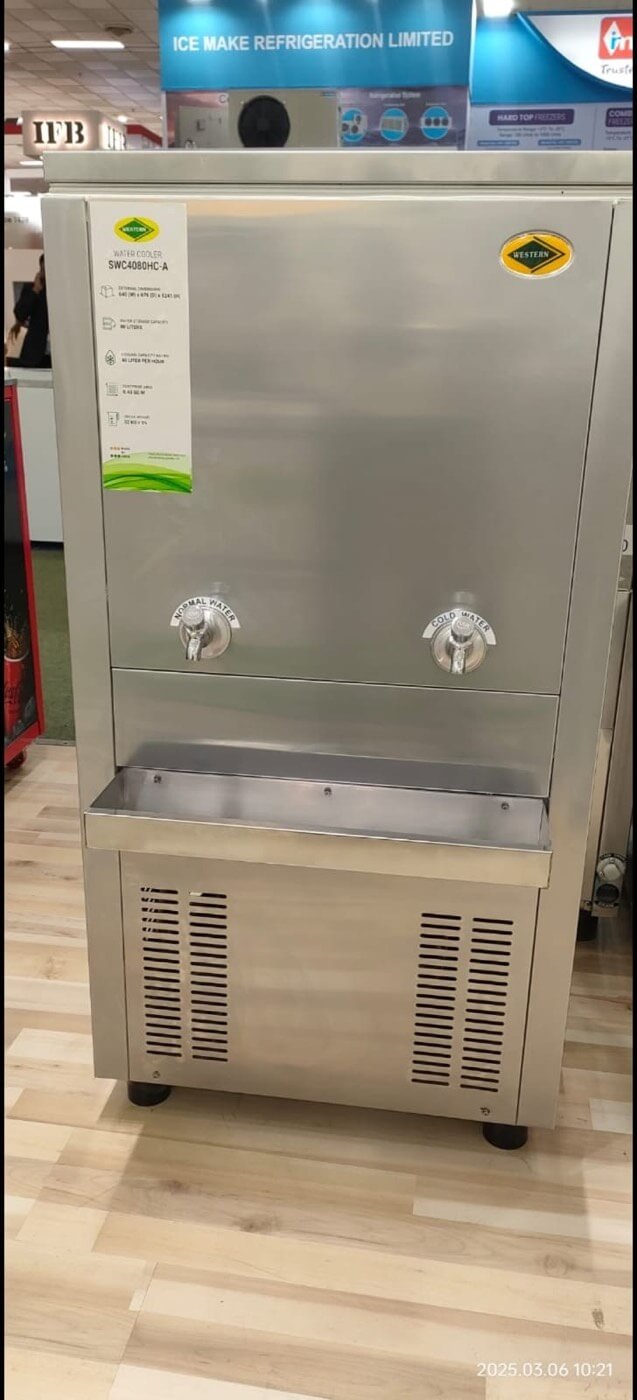
| Hot and cold floor-standing dispenser | Hot plus cold | No RO or purification listed | Not suitable alone for raw tap, borewell or open well water |
| Commercial RO purifier with storage | Chilled plus normal | Inbuilt RO, UF and TDS control | No hot water, so it may not serve tea or coffee points |
| Hot and cold dispenser with RO setup space | Hot plus cold | External RO required | Setup space does not mean the RO is included |
| Hot, normal and cold dispenser with inbuilt RO | Hot plus normal plus cold | Inbuilt RO | Check heating and cooling capacity, tank material and electrical load |
A typical hot, normal and cold dispenser with inbuilt RO may have an 8 litre stainless steel tank, 6 litres per hour cooling, 5 litres per hour heating, and a 220 to 240V AC, 50 Hz single phase supply. Cooling input is about 140 W; heating input alone can draw about 510 W. Some hot and cold cabinets with RO setup space offer 5 or 10 litres per hour cooling and a cold tank up to 15 litres. A commercial RO purifier giving only chilled and normal water may purify up to 40 litres per hour with 20 litres storage and chilled water at 7 to 17 degrees Celsius.
Peak demand matters more than total daily water use. An office tea point can draw hot water in a short morning window, while cold demand may rise after lunch or in non-air-conditioned spaces.
For a small office or clinic with 10 to 20 people, 5 litres per hour heating and 5 to 6 litres per hour cooling is usually adequate if storage is not too small. Larger offices or busy canteens need 10 litres per hour cooling and a 15 litre cold tank to avoid queues. Purification capacity should match the incoming water line and peak refill rate, not just dispenser output. In some commercial settings, a dedicated RO plant is a better fit because it can feed multiple taps, pantries and equipment. HomeCare RO can also assess bulk water supply needs for larger office buildings, canteens or utility water.
A free site check should record incoming water TDS, hardness, iron level and visible contamination. This determines whether simple pre-filters are enough or multi-stage RO, UV and UF are required. Seaward Kochi areas and open well sources may need different treatment than municipal line water.
Installation starts with the water source, floor space, drainage and power point. The dispenser needs a direct water line connection, ventilation space, a drain point for RO reject water and a stable power socket. Heating load is high, so the office circuit should be checked before a hot water dispenser is installed. A stabiliser may be needed if voltage fluctuates.
HomeCare RO provides a free site visit before every quote. A technician checks inlet water quality, available space, plumbing route, drainage point and electrical load, then recommends an inbuilt RO dispenser or an external RO connected to a hot and cold cabinet. Scheduling is handled quickly through WhatsApp, and the service uses genuine parts and transparent pricing with no hidden installation fees.
Routine maintenance covers the RO membrane, pre-filters, UV lamp, storage tank, taps and heating tank. It includes filter replacement, membrane checks, sanitising the cold tank and descaling the hot tank if hard water is in use. Intervals depend on incoming water quality and daily consumption, not a fixed calendar. High TDS or iron may need more frequent pre-filter changes.
A stainless steel tank is easier to keep hygienic than a plastic-lined tank, especially where hot water is stored. The compressor, heating element and RO pump should be checked during scheduled servicing. HomeCare RO offers scheduled servicing and filter replacement to keep dispensed water quality consistent.
Do not assume that “RO setup space” means the RO is already fitted. Confirm whether purification is inbuilt or external. Do not buy a hot and cold cabinet without RO for borewell or open well water; it will cool and heat raw water without making it safe. Do not buy a chilled and normal RO purifier if the office needs hot water for tea, coffee or instant food. Check dimensions and weight, then measure floor space and doorway. Check power load, especially heating input, so the circuit does not trip during peak use. Verify which Indian water safety standard applies; ISO 9001 for a company is not the same as a purification standard.
Before choosing between an inbuilt RO dispenser and a separate RO plant, call or WhatsApp HomeCare RO at +91 97464 88180 for a free on-site water test of TDS, hardness and visible contaminants. The team can recommend a dispenser capacity and configuration without obligation.
The best unit depends on incoming water quality, staff count, hot water demand and electrical load. An inbuilt RO unit with hot, normal and cold output works well for a compact office, while a hot and cold cabinet with external RO may suit a larger floor if the RO is already on site.
Choose by output type, cooling and heating capacity, storage tank capacity, tank material and maintenance access. A direct water line connection is usually better than a bottle mounted unit because it removes the need to store and replace water cans.
RO water is widely used for daily drinking in Indian offices and homes. The purifier removes dissolved impurities, bacteria, viruses, cysts, arsenic, rust, pesticides and fluorides when maintained correctly. TDS control can retain some essential minerals.
The right purifier matches incoming TDS and hardness with required litres per hour. A 40 litres per hour purifier with 20 litres storage suits a high consumption office, but hot water requirement must be checked separately because many high output RO purifiers only give chilled and normal water.