Purification Systems
Not sure which service you need?
Treatment Plants
Not sure which service you need?


Reach out on WhatsApp for a free site visit and quote.
HomeCare RO installs and services swimming pool filtration plants, covering the sand or media filtration, circulation pump and dosing needed to keep pool water clear and within recommended chemical parameters.
Filtration and circulation systems for residential and commercial pools
Genuine parts, transparent pricing, and a technician who shows up on schedule.
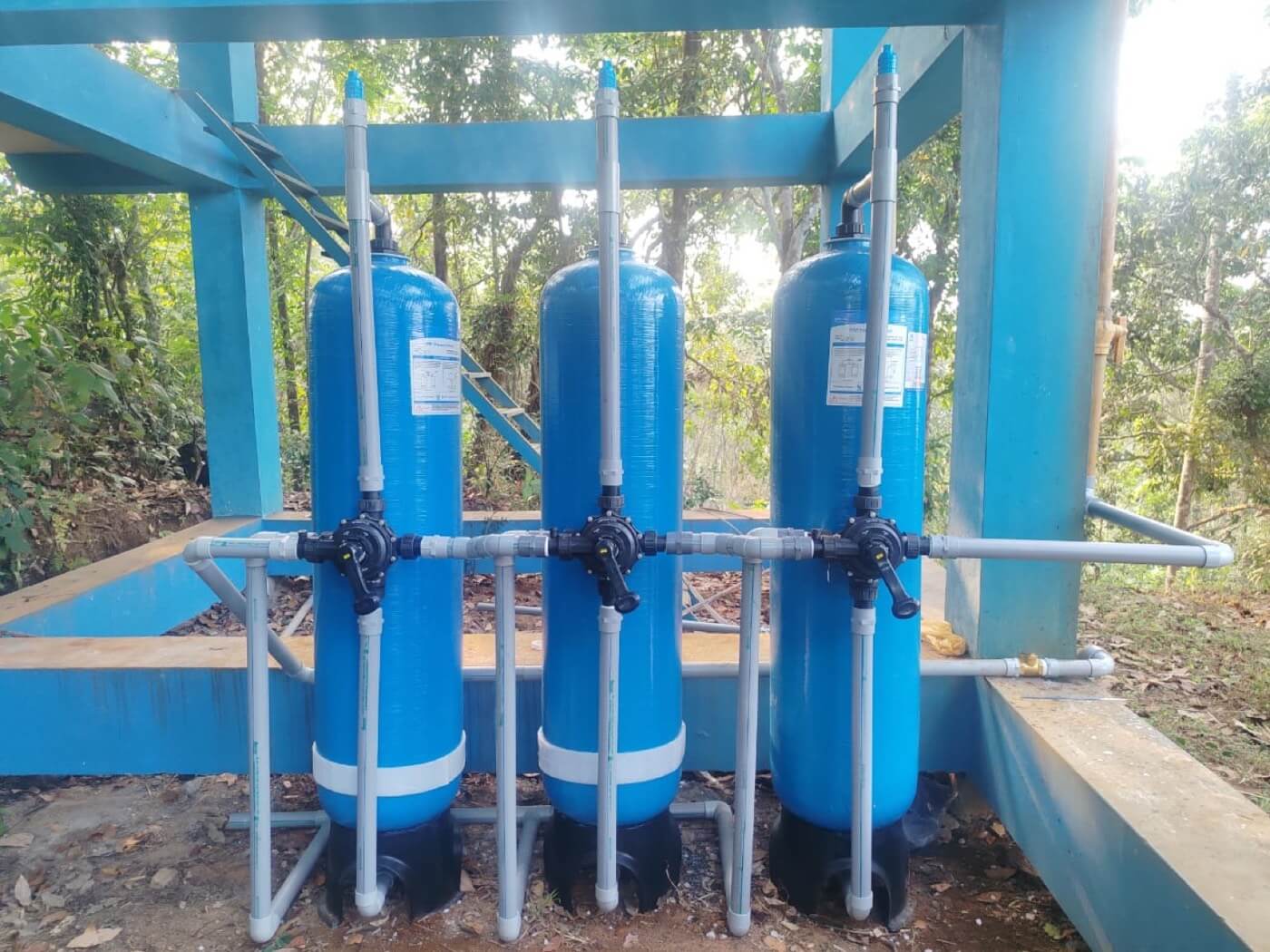
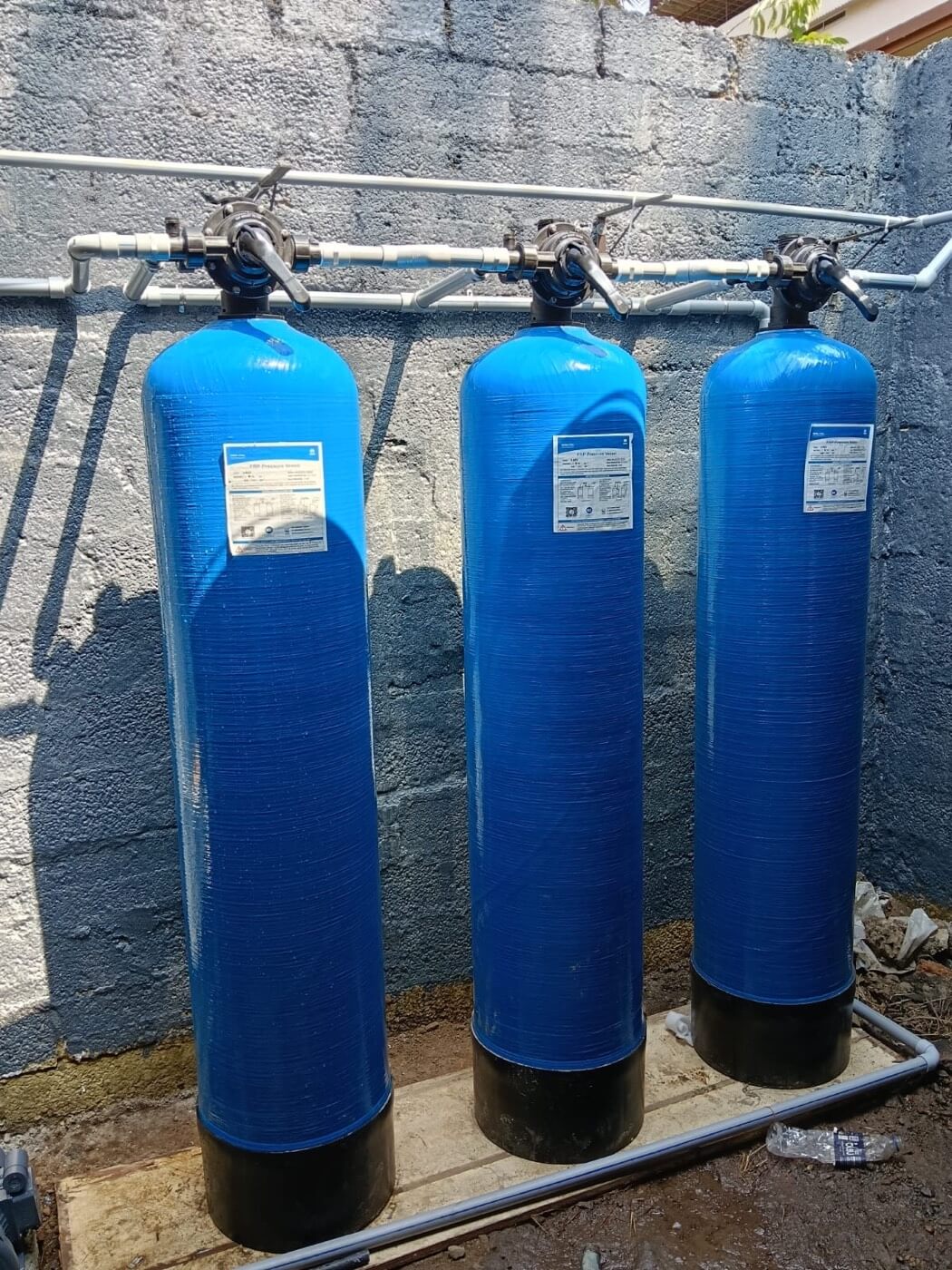
A swimming pool sand filter uses a bed of graded sand inside a fiberglass or FRP vessel to catch hair, leaves, dust and fine suspended solids as pool water is pumped through it. HomeCare RO installs these systems for homes, hotels, resorts, clubs and other commercial pools in Kochi and surrounding Kerala, with a site visit before every quotation.
In a top-mount sand filter, pool pump water enters through a multiport valve, spreads over the sand bed and passes downward. Sand traps particles while cleaned water flows into bottom laterals and returns to the pool. The multiport valve, often a 6-position or 8-position model on a 1.5 or 2 inch connection, controls filter, backwash, rinse, waste, recirculate and closed. Backwash reverses flow through the sand bed and sends dirty water to drain. Rinse settles the sand bed before returning to filter position. Trapped load raises pressure gauge over time.
Pool water also needs chemical treatment. pH is kept around 7.6, and alum or acid may be added to settle fine dust and impurities. Chlorine or bromine controls biological growth, and ozone or UV can supplement disinfection. A sand filter captures particles but does not replace chemical dosing.
A site inspection identifies whether the sand bed, valve, pump or filter size is at fault.
Filter diameter is not the only selection point. HomeCare RO checks pool volume, pump flow rate, pipe size and intended daily run hours. Common Indian commercial and residential sand filter diameters include 450 mm, 650 mm, 700 mm, 900 mm and 1200 mm. A 2 inch valve behaves differently from a 1.5 inch valve.
When comparing a sand filter under 25000, between 25000 and 50000, between 50000 and 100000, or over 100000, price band alone is not useful. A small low-flow filter will not hold up on a large commercial pool even if initial cost is low. Correct match keeps turnover rate and backwash flow within practical range.
| Filter type | Media | Maintenance style | Best suited for |
|---|---|---|---|
| Sand filter | Graded sand bed in a fiberglass or FRP vessel | Backwashing; loses water and chlorine after each backwash | Larger pools, hotels, resorts, clubs and high-debris outdoor pools |
| Cartridge filter | Polyester pleated cartridge | Remove and hose down; less water loss than sand backwashing | Smaller residential pools or where water waste is a concern |
| DE or filter bag | Diatomaceous earth or filter bag media | More involved cleaning and media replacement | Fine filtration where very clear water is required |
This table is indicative only. Choice depends on pool exposure, bather load, equipment room space and water availability.
A typical installation includes setting the vessel on a stable base near the pump, assembling the multiport valve and pipes, loading specified filtration sand to correct bed depth, checking leaks and setting clean pressure baseline. The technician confirms pump flow does not exceed filter design range.
HomeCare RO provides a no-obligation site visit before a quote, checks the existing pump and plumbing and recommends a matching filter size. HomeCare RO uses genuine parts and clear pricing without hidden charges. For properties that also need water tank cleaning, HomeCare RO can inspect the storage tank and pool feed line during the same visit.
Sand filters are low-maintenance but not zero-maintenance. Backwash when pressure gauge rises noticeably above clean baseline. Each backwash loses chlorinated water, so fresh chlorine must be added. Skipping this can turn pools green soon after backwashing.
The sand bed is not permanent. Grains lose sharp edges or develop channels, and backwashing becomes less effective. Inspect media when pressure recovery is poor or water stays cloudy. Use only pool-grade silica sand specified for the filter model. Building sand, beach sand or fine river sand will compact or wash out through laterals.
Other mistakes include buying by diameter alone, ignoring pump flow, wrong valve position after backwash and assuming a sand filter alone keeps pool water safe. Filtration, disinfection and water balance work together.
Before deciding, ask HomeCare RO for a free water test to check TDS, hardness and visible contaminants. This helps size filtration and dosing for borewell, open well or municipal pool fill water. To book the free water test or a site visit, message HomeCare RO on WhatsApp at +91 97464 88180.
Yes. For most Indian residential and commercial pools, a sand filter handles high debris loads and is easy to backwash. Backwashing wastes water and chlorine. Small pools with limited water supply may suit a cartridge filter.
No single best filter. Sand filters suit large pools, hotels and clubs; they hold more dirt and tolerate continuous use. Cartridge filters use less water and need less backwashing. DE filters give fine filtration but need more maintenance. Pool volume, pump flow and water availability decide.
Use clean silica sand made for swimming pool filters, not construction sand, beach sand or river sand. Correct grade and bed depth depend on filter model and vessel diameter.
The fiberglass or FRP vessel lasts long if protected from direct sun, excessive pressure and rough handling. Sand media has a shorter life because backwashing gradually wears grains. Inspect sand when backwashing no longer restores normal pressure or clarity stays poor.