Purification Systems
Not sure which service you need?
Treatment Plants
Not sure which service you need?


Reach out on WhatsApp for a free site visit and quote.
Certain industrial processes, boiler feed applications and laboratories need water with minerals removed beyond what standard RO can achieve. HomeCare RO supplies demineralization plants using ion-exchange resin, sized to the process requiring DM water.
Demineralized water for boilers, laboratories and industrial processes
Genuine parts, transparent pricing, and a technician who shows up on schedule.
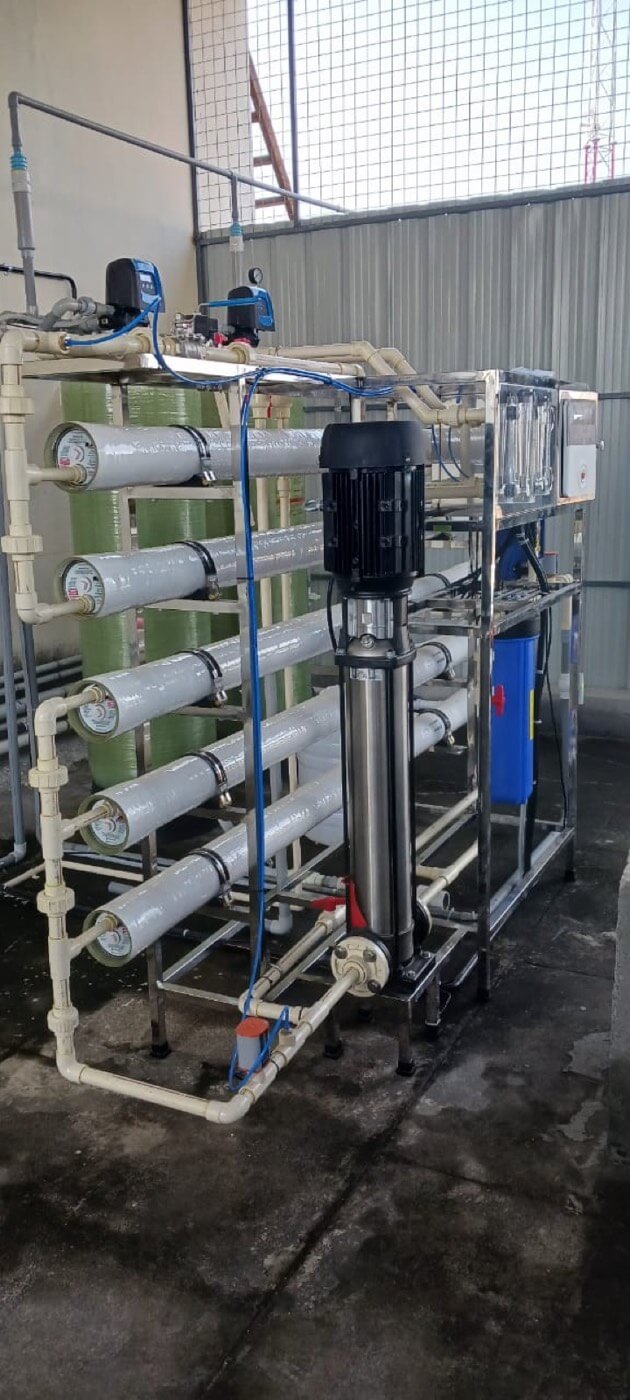
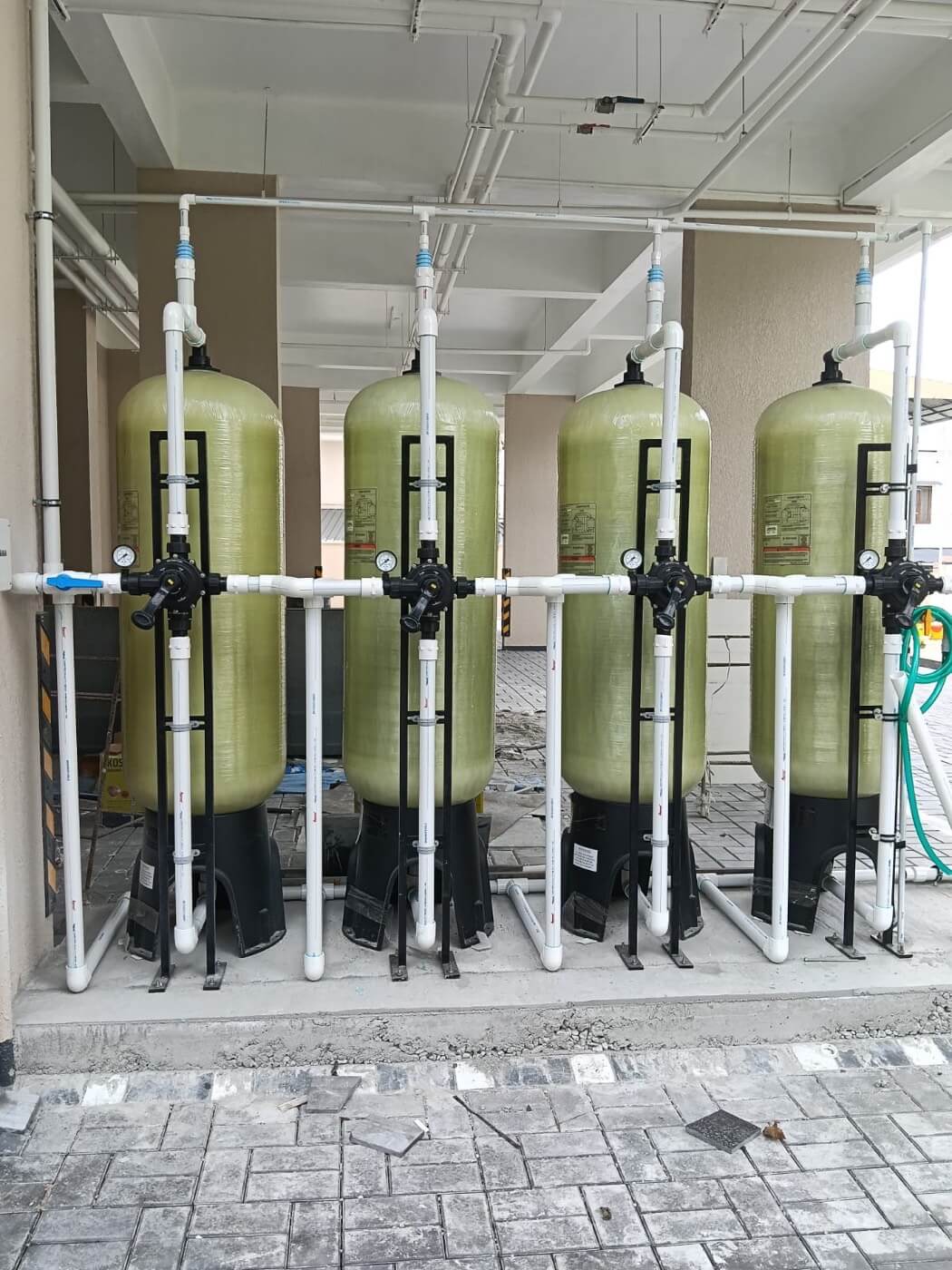
A DM water plant removes dissolved mineral salts from raw water through ion exchange, producing high-purity water for laboratories, boiler feed, pharmaceutical manufacturing and sensitive process work. Cation exchange replaces dissolved metal ions with hydrogen, anion exchange replaces chloride, sulphate, nitrate and silica with hydroxide, and the hydrogen and hydroxide combine to form water. A properly sized DM plant includes pre-treatment, regeneration and treated water storage matched to feed quality and throughput.
Most DM plants follow this sequence:
The flow path runs: raw water, pre-treatment, cation exchange, anion exchange, mixed bed polishing, treated water tank, point of use. A basic two-bed DM plant can stop after the anion stage. High-purity service usually adds mixed bed polishing. Packaged two-bed deionisers often operate between 1.0 and 15.0 m3/h, while custom-engineered plants may be sized from 100 LPH up to 500 m3/h or more.
DM removes ionized dissolved solids: calcium, magnesium, sodium, chloride, sulphate, nitrate and silica. It does not remove suspended particles by itself, and it should not be assumed to remove every uncharged or non-ionic dissolved contaminant. Pre-treatment, and sometimes a membrane stage before DM, is used depending on the raw water.
A DM plant is worth considering when a laboratory or quality-control setup needs consistent mineral-free water, when a boiler is showing scale or high blowdown despite soft water, or when a process is affected by chlorides, sulphate or silica. In pharmaceutical, electronics, textile, chemical and food processing setups, a DM line is often selected because hardness-only treatment is not enough. In Kochi and nearby Kerala, borewell and open well sources can vary with iron, hardness and coastal salinity, so raw water analysis usually helps decide whether DM is needed or whether pre-treatment must be added first.
Before selecting a DM plant, first decide whether the feed needs full demineralization or selective removal. A water softener handles calcium and magnesium but not chloride, silica or sulphate. An RO plant lowers a broad range of dissolved solids but may still need mixed-bed polishing for very low conductivity. A DM plant is then sized on flow rate, feed composition, resin volume and service requirements.
| Configuration | What it does | Where it fits |
|---|---|---|
| Two-bed cation and anion | Removes bulk ionized salts | General process water, boiler feed before polishing |
| Mixed bed polishing | Cation and anion resins in one column remove residual ions | Labs, pharma, electronics, final boiler feed |
| Two-bed upflow or counter-current | Improves chemical efficiency and reduces regenerant loss | Packaged industrial deionisers |
| Layered bed anion unit | Combines weak base and strong base anion resin in one vessel | Fewer vessels and valves for specific chemistry |
Vessel material options include MS epoxy, SS304, SS316L, FRP, PVC and CPVC. Automation can range from manual to PLC/SCADA with remote monitoring. Regeneration is usually done with acid for cation resin and caustic for anion resin. Mixed-bed regeneration is more complex: in-place regeneration needs careful valve sequencing to keep acid and caustic apart, while external regeneration is often preferred for larger plants.
A typical installation includes raw water analysis, pre-treatment setup, ion exchange vessels, chemical handling for regeneration, a treated water tank and sampling points. Pre-treatment filters are important because suspended solids, chlorine and organics can damage or foul resin. Do not backwash a mixed bed during normal service, as that can separate the mixed resins. Superficial velocity through a mixed bed is generally kept between 2 and 8 m/h; higher velocity can reduce contact time and polishing quality. A fixed 50:50 cation to anion resin ratio is not universal; the ratio should be selected from feed composition and resin capacity. Maintenance usually includes regeneration, resin cleaning or replacement, valve checks and periodic raw water testing.
If you are evaluating a DM plant for a laboratory, process water line or boiler feed, book HomeCare RO’s free water test first. The team checks TDS, hardness and visible contaminants before any recommendation, and site visits can be scheduled quickly on WhatsApp at +91 97464 88180.
Raw water is pre-treated to remove suspended solids and chlorine, then passes through cation exchange to replace positive ions with hydrogen and anion exchange to replace negative ions with hydroxide. The hydrogen and hydroxide combine to form water, and a mixed bed polishing stage removes residual ions for high-purity use.
Two-bed DM water typically falls in the low single-digit microsiemens range before final polishing. After mixed-bed polishing, the common target is below 1 µS/cm, often around 0.1 to 1 µS/cm for laboratory and boiler feed use, depending on feed water and resin condition.
RO uses membrane separation to reduce a broad range of dissolved solids, while DM uses ion exchange to remove ionized salts and can reach lower final conductivity. RO is common for bulk desalination and pre-treatment, while DM is preferred when very low mineral content is required.
A DM plant removes dissolved salts such as calcium, magnesium, sodium, chloride, sulphate, nitrate and silica. This helps prevent scale, corrosion and contamination in boilers, laboratories, pharmaceutical processing and other industrial systems.